

 James Hardie
 Vinyl
Vinyl Cedar
Cedar AL13 covering
 Aluminum
 Metal
Metal Engineered Wood
 Lux Panel
 Longboard
 Easy Trim Quick Panel system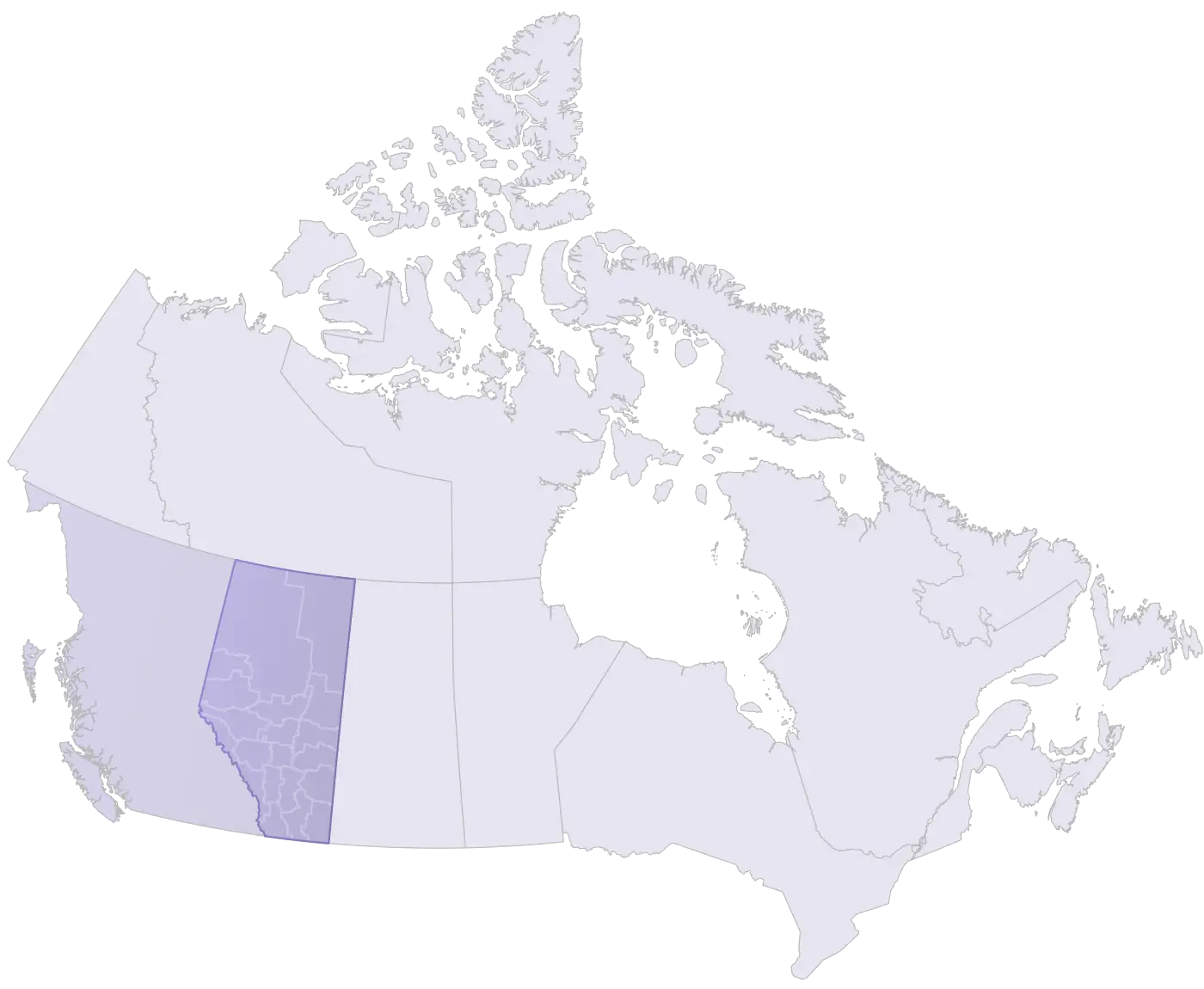

Сedar Siding
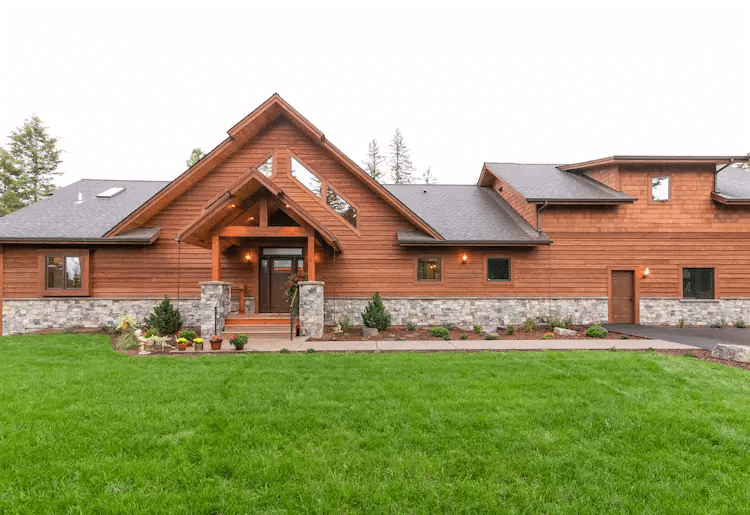
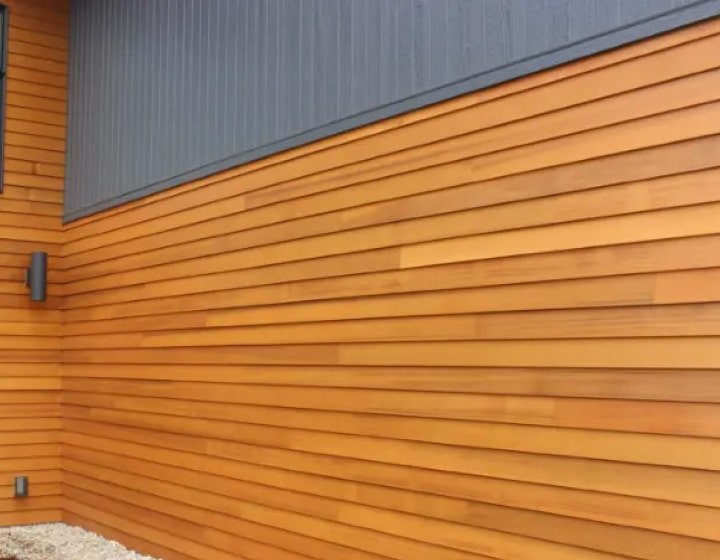
Exterior cedar siding in Alberta must endure extreme winters, unpredictable weather conditions, and the need for lasting curb appeal. This is where cedar truly shines. Cedar wood isn’t only tough; it’s naturally designed to take on whatever Mother Nature throws at it.
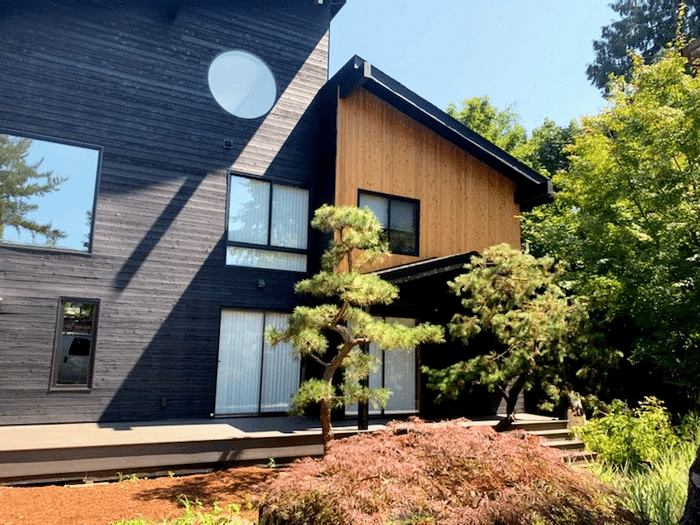
From the refined look of western red cedar to the clean, structured lines of bevel designs, there’s a style to fit every project. Whether you’re aiming to give your home a modern edge with vertical designs or remain classically timeless with red cedar, this material delivers both in performance and in design. It’s more than an upgrade—it’s an investment in quality.
The Benefits of Cedar Siding

Natural Insulation:
Keeps your home warm during winter and cool during summer, improving energy efficiency

Long-Lasting:
Properly maintained, cedar can last as long as 50 years

Fade Resistant:
Modern finishes maintain color longer, even in Alberta’s intense sun

Eco-Friendly:
Only occasional cleaning is needed every couple of years

Low Maintenance:
Only occasional cleaning is needed every couple of years

All-Climate Ready:
Built for freezing winters and hot summers alike, no matter the style

Fire Resistant:
Naturally less flammable, adding an extra layer of safety

Rot-Proof:
Western red cedar withstands water and decay, ensuring long-lasting performance

Pest Resistant:
Insects like termites and woodpeckers are no match for this material

Varied Designs:
From bevel to shake styles, the design options are vast

Scratch Tough:
Cedar hides wear and tear easily, retaining its beauty for years

Weather-Resistant:
Perfect for Alberta’s snow, rain, and temperature fluctuations

Variations of Covering
The covering is able to offer proprietors various styles & textures to make any building look perfect. The choice of a suitable type of covering will help create either a classic or contemporary look. Consider the most popular varieties of organic covering for the renovation of residential houses:
-
Natural Cedar Boards
Clapboard is a traditional style where long horizontal boards overlap. This style provides excellent protection against water, thanks to its overlapping design. It offers a polished yet timeless look with customizable exposures, typically 10–20 cm.
 Horizontal Lap Covering
Flat exterior walls gain dimension with horizontal lap cladding. Smooth or textured finishes create symmetry and elegance. Variants like Dutch lap or bead-strip designs offer a twist of modernity while maintaining versatility.
Channel PanelingChannel siding is suitable for horizontal, vertical, or diagonal installations. The overlapping edges allow the wood to expand and contract with temperature changes, preventing damage like cracking or warping. A snug groove cut along the edge provides a rustic look with excellent water resistance.
Split Log and Board & Batten OptionsFor a cozy, cabin-like feel, split log designs retain natural curves on one side while the flat underside ensures easy installation. Board and batten offers bold vertical lines for added architectural interest. Both styles add warmth and character, though they may need extra treatment for long-term durability.
Tongue and GrooveTongue and groove siding creates a smooth, seamless surface suitable for modern or antique-inspired aesthetics. Its interlocking design supports horizontal, vertical, or diagonal installation while lending greater structural integrity.
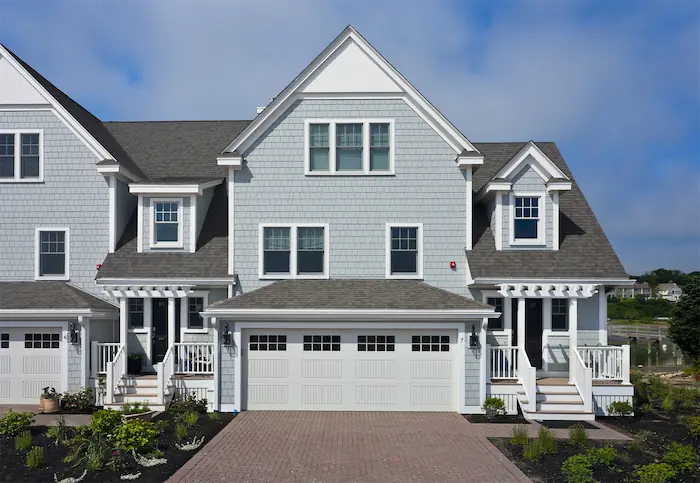
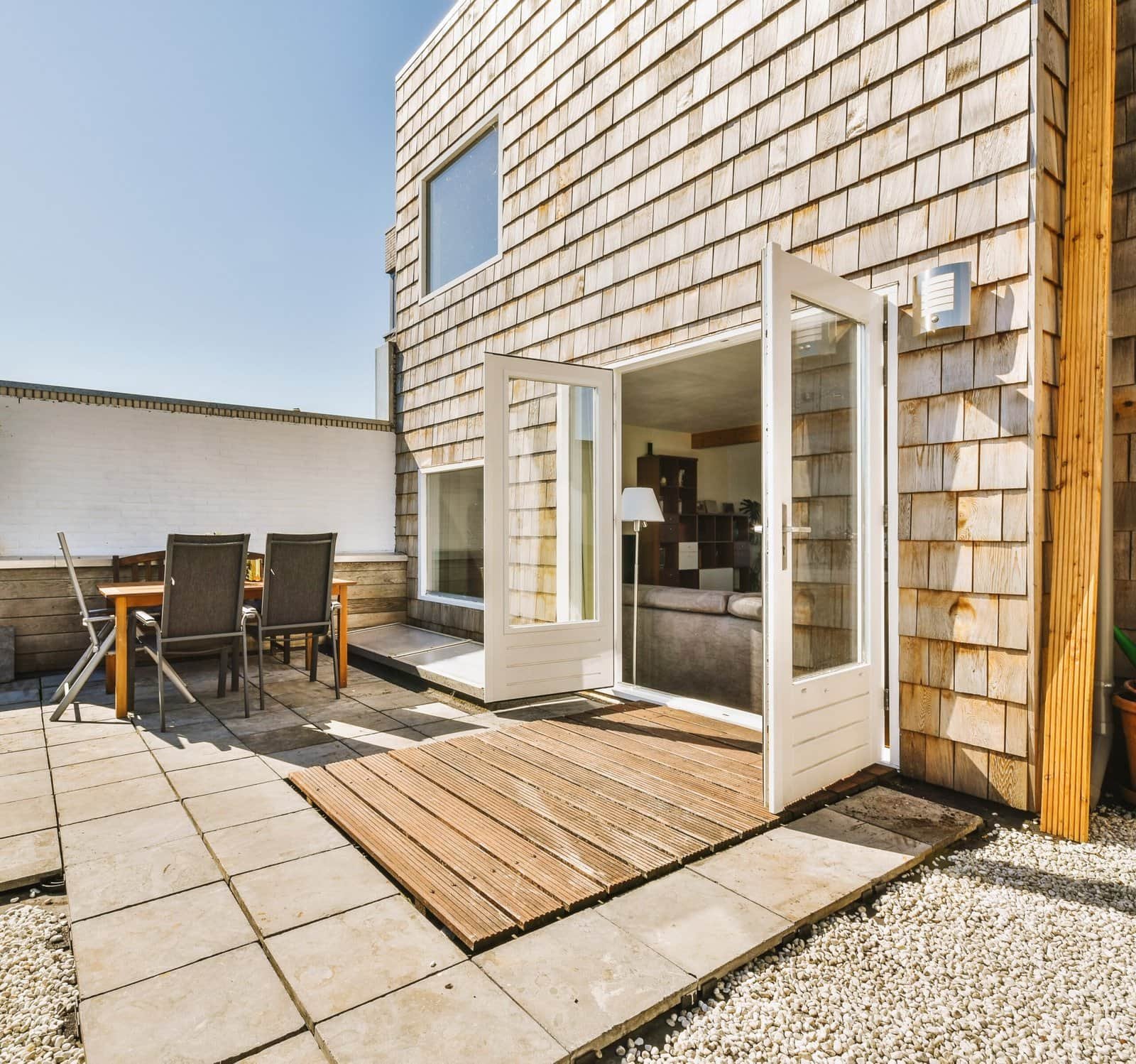
Shingle and Shake OptionsShingle designs provide a clean, modern aesthetic with evenly cut panels. Shake siding, on the other hand, offers a textured, rustic look with varying panel lengths. Both styles overlap for superior water protection and may require fire-retardant treatment in certain areas.
The exterior of your home is more than a layer of protection—it’s an opportunity to express your style. With red cedar, the possibilities are endless. Whether you prefer the rich, natural tones of western red cedar or a painted finish for a contemporary flair, there’s a color and texture to match every vision.
Colors
Add natural beauty to the exterior of your home with the help of cedar siding. From the rich warmth of Western Red Cedar’s honey tones that naturally age to distinguished silver gray, to custom stains offered in everything from light Natural to deep Mountain Cedar. Our selection includes semi-transparent stains that enhance the natural grain of cedar and solid finishes for a more contemporary look.
Every finish is uniquely formulated to resist Alberta’s extreme UV exposure and hold its appearance for years to come.


Timberline
All colors shown are representative and may not be an exact match.

Cedar
Cider Mill
Cottage Red
English Saddle
Midnight Blue
Napa Vine
Ripe Olive
Spruce
Statuary Bronze
Timber Ash
Weathered Wood
White
Cedar Siding Costs
Several factors influence the cost of installation:
-

Size of the Job
iLarger homes or complex designs require more materials and labor.
-

Preparation Complexity
iSurface repairs or extra preparatory work can increase costs.
-
Additional Treatments or Finishes
iStaining, painting, and fire-retardant treatments can add to the budget.
Start at 13.5$
-

Removal of Existing Materials
iTaking off old cladding increases labor costs but provides a clean slate for the installation.
-
Grade and Quality Selection
iPremium grades offer better stability and fewer imperfections but come at a higher price.
-
Architectural Features
iDetails like corners, trim work, and decorative elements require additional materials and expertise.
On average, installing cedar siding can range between $13.5 and $15.00 per square foot. For an 1,800 sq. ft. house, the total cost typically falls between $24,300 and $27,000.
Cedar Siding Cost
Western red cedar delivers natural warmth no other product fully matches, with a 20 to 40 year service life when maintained. Cedar carries no manufacturer warranty; protection comes from the installer's workmanship warranty and a re stain cycle every 3 to 5 years.
Item Description / Use Case Estimated Cost (CAD)- Cedar bevel or clapboard Classic overlapping horizontal boards, knotty grade $10.00 to $14.00 per sq ft
- Clear grade bevel upgrade Premium clear boards with minimal knots $14.00 to $18.00 per sq ft
- Channel siding Rustic profile run horizontal, vertical or diagonal $11.00 to $15.00 per sq ft
- Board and batten cedar Bold vertical rhythm for farmhouse and mountain styles $12.00 to $16.50 per sq ft
- Tongue and groove Tight joint profile for premium accents and soffits $13.00 to $17.50 per sq ft
- Cedar shakes and shingles Textured gables and focal walls $14.00 to $20.00 per sq ft
- Factory prefinished package Stain or solid colour applied before delivery, more even coverage +$2.00 to $4.00 per sq ft
- Site applied stain and sealer Two coat semi transparent or solid finish after install $2.00 to $6.00 per sq ft
- Fire retardant treatment Pressure treated option for wildfire interface areas +$2.00 to $4.00 per sq ft
- Cedar trim and corner package Matching 5/4 trim boards and corners $12.00 to $20.00 per linear ft
- Cedar soffit package Tongue and groove roofline finish $12.00 to $35.00 per linear ft
- Rainscreen assembly Strongly recommended drainage gap behind all wood siding $2.50 to $4.25 per sq ft
- Tear off and disposal Removing and hauling away existing cladding $1.00 to $3.75 per sq ft
- Two storey access premium Added labour and staging for a full two storey home +15% on wall labour
- Whole home reference Typical 1,800 sq ft two storey home, knotty grade, stained $24,000 to $32,000
Portfolio
-
-
-

-
-
- Constant Communication
- Transparency
- Top-Notch Installation
-
-
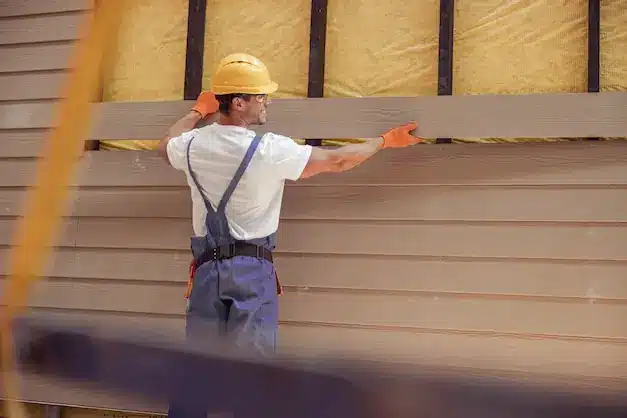
The process of siding installation
-
 Old Siding Removal
The first step involves carefully removing existing materials without damaging the underlying structure.
-
Inspection and Surface Preparation
Once removed, the wall structure is inspected for damage like rot or cracks. A weather-resistant barrier is then applied for added protection.
-
Cutting and Finishing Panels
Each piece is measured and cut to fit perfectly. Options like bevel, tongue and groove, or shingle styles can be stained or painted during this step.
-
Installation
Boards are installed with precision techniques, overlapping where necessary to create a seamless and weather-resistant finish.
-
Finishing Touches and Clean-Up
Final checks ensure the siding is properly installed, and any additional treatments, such as stains or fire-retardants, are applied. The site is then cleaned, leaving your home with a polished exterior.
Cedar Siding: Benefit From Warmth, Character & Longevity
Let’s get right to the point: cedar panel siding makes a statement. From its rich natural colour to its distinctive grain and wood texture, cedar gives homes a warmth that many other cladding materials struggle to replicate.
But cedar is not just about looks. It also performs well in Alberta’s climate, and with consistent maintenance it can continue looking excellent for decades.
Why Albertans Choose Cedar House Siding Time and Time Again
One of cedar’s biggest strengths is design flexibility, but that is only part of the story. Alberta homeowners keep coming back to cedar because of its:
- Timeless aesthetics. Cedar rarely goes out of style and adds instant curb appeal.
- Natural resistance to decay. Its natural oils help defend against rot, fungal growth, and moisture-related deterioration.
- Resistance to many insects. Western Red Cedar naturally discourages many wood-boring pests.
- Excellent durability. When installed and maintained properly, cedar siding can last 30 to 50 years or more.
- Natural thermal insulation. Cedar insulates better than many metal sidings and non-insulated vinyl siding.
- Good movement tolerance. Properly installed cedar can accommodate Alberta’s seasonal expansion and contraction more naturally than many rigid materials.
- Lightweight construction. It is easier to handle than heavier systems like fiber cement.
- Flexible finish options. Homeowners can leave the wood natural, stain it, paint it, or allow it to weather into a silver-grey patina.
- Environmental appeal. Cedar is renewable and biodegradable, and typically requires less manufacturing energy than products like vinyl or many metal systems such as LUX Panels, Longboard, EasyTrim Quick Panels, and AL13 Coverings.
What Are the Downsides of Cedar Siding?
Cedar has a lot going for it, but it is not the perfect choice for every project. The main drawbacks are:
- Higher upfront cost. Cedar usually starts above vinyl and fiber cement.
- Regular maintenance. It needs periodic cleaning and eventually re-staining or repainting to stay protected.
- Fire resistance limitations. Western Red Cedar performs better than many woods, but it is still combustible.
- Professional installation requirements. Proper spacing, flashing, ventilation, and fastening all matter for long-term performance.
That is why cedar siding should be installed by experienced crews such as Family Siding, especially on homes where long-term durability matters.
What Does Cedar Siding Cost?
Cedar is a premium-looking natural product, but the final installed price varies depending on the profile, finish, and project size. In general, installed cedar home siding costs range from about $13.50 to $15.00 per sq ft.
- For a 1,500 sq ft home: about $20,250 to $22,500
- For a 2,000 sq ft home: about $27,000 to $30,000
If you compare cedar against materials with a similar visual warmth, engineered wood siding is the closest benchmark. Since engineered wood starts around $20.50 per sq ft, cedar can actually leave more than $10,000 in savings on a 1,500 sq ft example home.
Is Cedar Siding a Durable Choice for Your Home?
Yes. If you love the look of Red Cedar siding and do not mind a little extra maintenance, it is an excellent long-term cladding option. It performs well in Alberta because it:
- Maintains its structure through frequent temperature changes
- Has natural resistance to rot and moisture damage
- Can be refinished to extend its protection
- Helps moderate interior temperatures through its natural insulating properties
When installed and maintained correctly, cedar plank siding in Alberta can last 50+ years.
Deciding on Which Type of Cedar Siding to Install
Cedar comes in several profiles, and each one suits a different style of home or design goal.
Cedar Bevel Siding / Cedar Clapboard Siding
These two terms are almost interchangeable. The boards are thicker on one edge than the other, creating overlapping horizontal lines that look timeless and shed water effectively. Cedar bevel siding is also often called lap siding.
When to use: Traditional family homes, lake cottages, and farmhouses.
Cedar Channel Siding
Cedar channel siding can be installed horizontally, vertically, or diagonally, and it creates deeper shadow lines that add dimension right away.
When to use: Designs that lean more architectural or custom.
Board and Batten
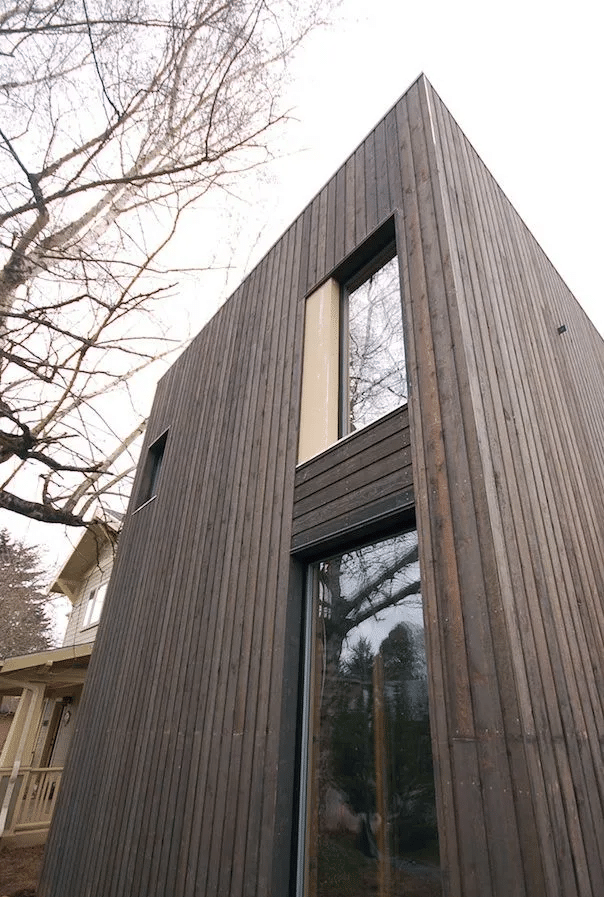
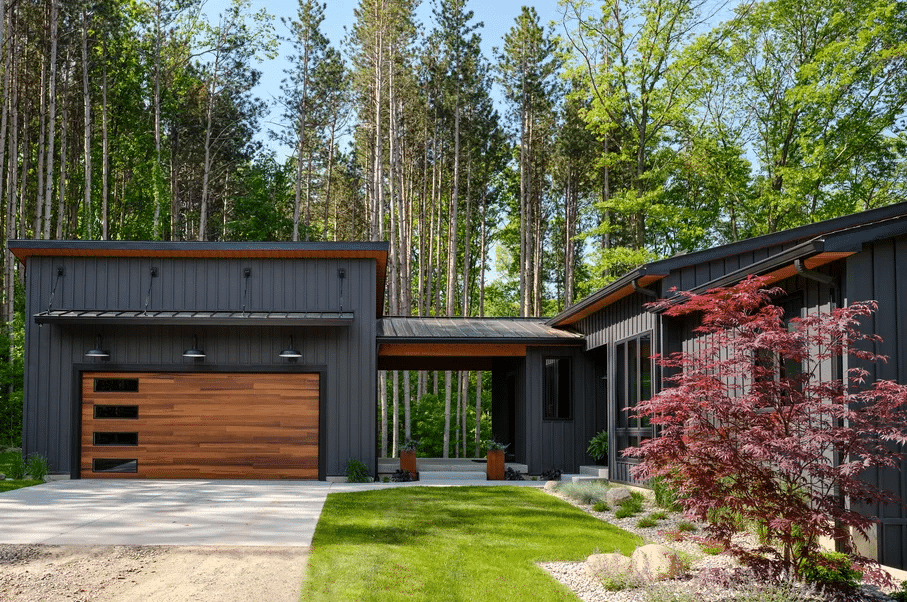
This profile uses wide vertical boards with narrow battens over the joints. It adds texture and visually emphasizes height.
When to use: Farmhouse and modern-rustic homes.
Cedar Shingles and Shakes
Shingles are more uniform, while shakes are rougher and more rustic. Both are installed in overlapping patterns.
When to use: Most often for accent areas such as gables, dormers, or feature walls.
Tongue and Groove
Unlike bevel siding or shingles, tongue-and-groove boards interlock rather than overlap. They can be installed horizontally, vertically, or diagonally.
When to use: Modern cedar applications or cleaner contemporary detailing.
Split Log Siding
This profile keeps the rounded outer edge of the board for a more cabin-inspired appearance.
When to use: Projects that want a log-cabin feel without rebuilding from scratch.
How Often Does Cedar Siding Require Maintenance?
Alberta’s UV exposure and temperature extremes accelerate weathering, so cedar benefits from regular attention. A good maintenance rhythm usually includes:
- Annual cleaning to remove dirt and debris
- Annual inspections for cracks, moisture issues, failed sealants, or loose boards
- Repainting roughly every 7 to 10 years when paint is used
- Re-staining about every 5 years where stain systems are used
One underrated advantage of cedar is repairability. Compared with many other cladding types, individual cedar boards are relatively straightforward to replace when needed.
So, Is Cedar Siding Good for Exterior Siding?
Absolutely. For many Alberta homeowners, cedar is one of the best balances of style, durability, and value in a natural product. Whether your vision is traditional cedar clapboard or vertical board and batten, it can deliver a warm, durable exterior that stands out for the right reasons.
If cedar sounds like the right fit for your home, contact us for a free quote and project consultation.

A Company You Can Trust
At Family Siding, we are more than just installers; we are your all-in-one exterior solution.
Family Siding is ready to bring your vision to life. With our team of professional exterior renovation experts and hundreds of siding and cladding options that will fit your design aesthetic, your experience with Family Siding will be smooth and stress-free from start to finish.
Ready for a complimentary assessment or inspection?
FAQ
-

Why is cedar a good option for my home?
Cedar stands out for its natural beauty and durability. It resists moisture, decay, and pests while offering timeless aesthetics that increase your home’s value. -
How long does cedar siding last?
With proper care, it can last for decades—typically 20 to 40 years or more. Regular maintenance ensures it remains weather-resistant and visually appealing. -
What kind of maintenance does cedar require?
Cedar benefits from routine cleaning and inspections. Applying a fresh coat of stain or sealant every few years protects against UV rays and moisture. -

Is cedar sustainable?
Yes, cedar is a renewable resource with a lower carbon footprint compared to synthetic alternatives. Many suppliers source it from responsibly managed forests. -
Can cedar be painted or stained?
Absolutely. Staining enhances its natural grain, while painting offers a wide range of color options. -

How does cedar perform in different climates?
It’s well-suited for diverse environments, resisting rot and moisture in wet climates while providing insulation in cold regions. -
How does cedar compare to other wood options?
Cedar is lightweight, durable, and naturally resistant to pests, making it superior to many other wood materials. -
Is cedar worth the cost?
Though it may have higher upfront costs, cedar’s durability, insulating properties, and beauty make it a worthwhile investment.
 Thank you!
We'll get back to you within 60 minutes
Our technical team consists of experienced flooring installers. Plus, you will have a dedicated Project Manager overlooking the process.
Order a callbackWe'll get back to you within 60 minutes